
Choosing the Best Heating System for a New Home in Kelowna

A new home in Kelowna does not need heat the same way an older home does. Better insulation, tighter air sealing, improved windows, and modern building standards all reduce heat loss. That is good news for comfort and energy use, but it also changes the heating decision.
The old habit was to size equipment using broad square-footage rules. In a high-performance new build, that can lead to oversized systems, short run times, uneven temperatures, and higher upfront costs than needed. Choosing the best system starts with the home itself, not with a guess.

New homes need proper heat loss calculations
The most useful first step is a room-by-room heat loss calculation. This looks at how much heat the home needs on cold days based on real details:
Wall, attic, and foundation insulation
Window size, type, and orientation
Air sealing and ventilation
Basement design
Ceiling heights
Exposure to wind and shade
The home’s layout and ductwork plan
This matters because two homes with the same square footage can have very different heating needs. A compact two-storey home with high insulation may need much less heat than a wide bungalow with lots of glass.
For heating new home projects, proper sizing often matters more than the brand or fuel type. A premium system that is too large will not perform as well as a correctly sized system matched to the building.
Oversizing can cause:
Short cycling, where equipment turns on and off too often
Hot and cold rooms
More wear on parts
Noisy operation
Poor humidity control
Higher installation costs
A new home gives builders and homeowners a rare advantage. The heating system can be planned before walls are closed, ducts are installed, and mechanical rooms are set.
High-efficiency furnaces still make sense in many Kelowna homes
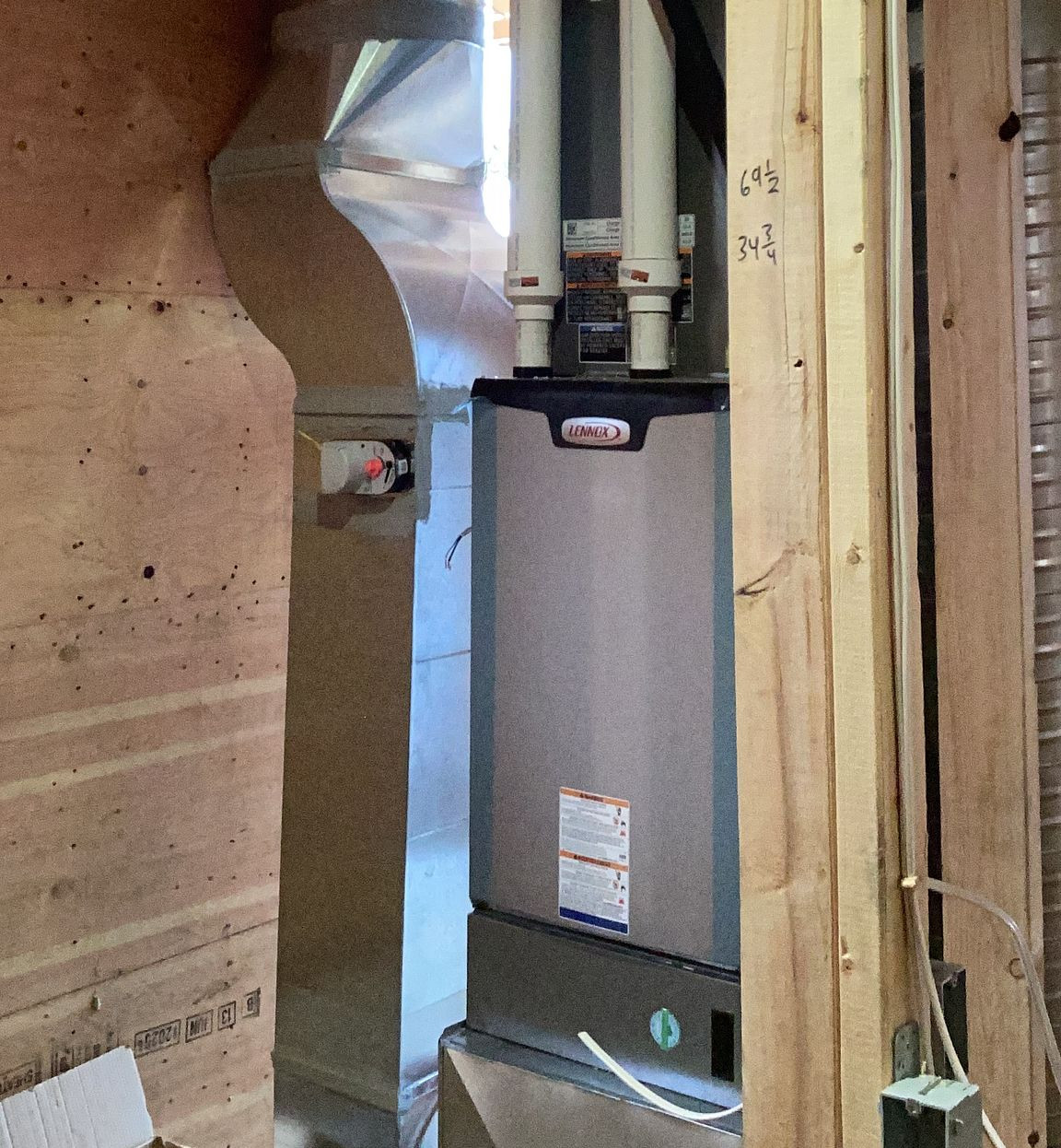
Natural gas has long been common in the Okanagan, and a high-efficiency furnace can still be a strong choice for many new homes. Modern condensing furnaces extract more heat from the same fuel than older mid-efficiency models. They also pair well with central ductwork, air conditioning, filtration, and heat recovery ventilation.
When comparing furnaces, gas furnaces in a new home should be sized carefully rather than selected by habit. A smaller, properly matched furnace may provide steadier comfort than a larger unit.
The main strengths of a high-efficiency furnace are clear:
Reliable cold-weather output
Familiar service network
Central air compatibility
Lower equipment complexity
Gas furnaces deliver strong heat even during cold snaps.
Many HVAC technicians in the region work with these systems daily.
The same ductwork can often support cooling and filtration.
A furnace-only setup can be simpler than some hybrid designs.
The tradeoff is fuel source. A gas furnace burns fossil fuel on site, so some households prefer an electric option to reduce direct emissions. Local utility rates, available rebates, electrical service capacity, and personal priorities all affect the decision.
Cold climate heat pumps are a serious option
Cold climate heat pumps have changed the conversation. Older heat pumps struggled in low temperatures, but modern cold climate models can keep producing heat well below freezing. That makes them a practical choice in many parts of British Columbia, including Kelowna, when designed correctly.
A heat pump moves heat rather than creating it through combustion. In winter, it pulls heat from outdoor air and transfers it indoors. In summer, it reverses and works like an air conditioner.
That dual role is a major benefit in Kelowna, where homes need both winter heat and summer cooling.
A cold climate heat pump may be a good fit when:
The home has a low heating load
The builder wants one system for heating and cooling
The electrical panel has enough capacity
The home has good duct design or a clear plan for ductless heads
Reducing on-site fossil fuel use is a priority
There are details to get right. Outdoor units need proper placement for airflow, defrost drainage, noise control, and snow clearance. Ducted systems need airflow designed for heat pump operation. Ductless systems need indoor head locations that avoid drafts and serve the actual living spaces.
In some homes, a heat pump can carry most of the heating season. In others, backup heat may be needed for the coldest days.
Hybrid systems can offer comfort in heating and flexibility for Kelowna's climate
A hybrid system combines a heat pump with a gas furnace. The heat pump handles heating when outdoor temperatures are mild to moderately cold. The furnace takes over when the temperature drops below a set point or when gas becomes the more practical option.
This approach can work well in Kelowna because the region has shoulder seasons where a heat pump can operate efficiently. The furnace remains available for peak winter demand.
A hybrid setup can be appealing when homeowners want:
Efficient cooling and heating from one outdoor unit
Gas backup for colder weather
Flexibility as energy prices change
Familiar forced-air comfort
A balanced path between electric and gas heating
The controls matter. A well-set thermostat or communicating system decides when to use each heat source. Poor setup can make a hybrid system less effective, so design and commissioning are not afterthoughts.

Ductwork and ventilation should be part of the same decision
Heating equipment gets the attention, but comfort often comes down to air distribution. A new home with poor duct design can feel uncomfortable even with good equipment.
Ducts should be sized and sealed for the expected airflow. Runs should be planned to reduce noise and pressure problems. Supply and return locations should match how the rooms will be used.
Ventilation also matters because new homes are tighter. Many new builds use a heat recovery ventilator or energy recovery ventilator to bring in fresh air while reducing heat loss. This system should be planned alongside the heating system, not treated as a separate add-on.
Ask these questions early in the build:
How was the equipment size chosen?
Is there a room-by-room heat loss calculation?
Where will ducts, returns, and vents be located?
How will fresh air be supplied?
Will the system support cooling?
Where will outdoor equipment sit?
What maintenance will the system need?
Good answers reduce surprises after move-in.

The best choice is the one designed for the specific home
There is no single best heating system for every new home in Kelowna. A high-efficiency furnace may be the right choice for one build. A cold climate heat pump may suit another. A hybrid system may offer the best mix of comfort, cooling, and backup heat.
The key is to avoid guessing. Start with the building envelope, calculate the actual heating load, then choose equipment that fits the home’s design and the way it will be lived in.
A modern new home is already built to waste less energy. The heating system should be just as carefully planned. When sizing, ducts, ventilation, and equipment all work together, the result is quieter comfort, lower energy use, and fewer regrets after the first winter.
Request a free on-site estimate or request a heat-load calculation for your new home!


Comments